Frost Town
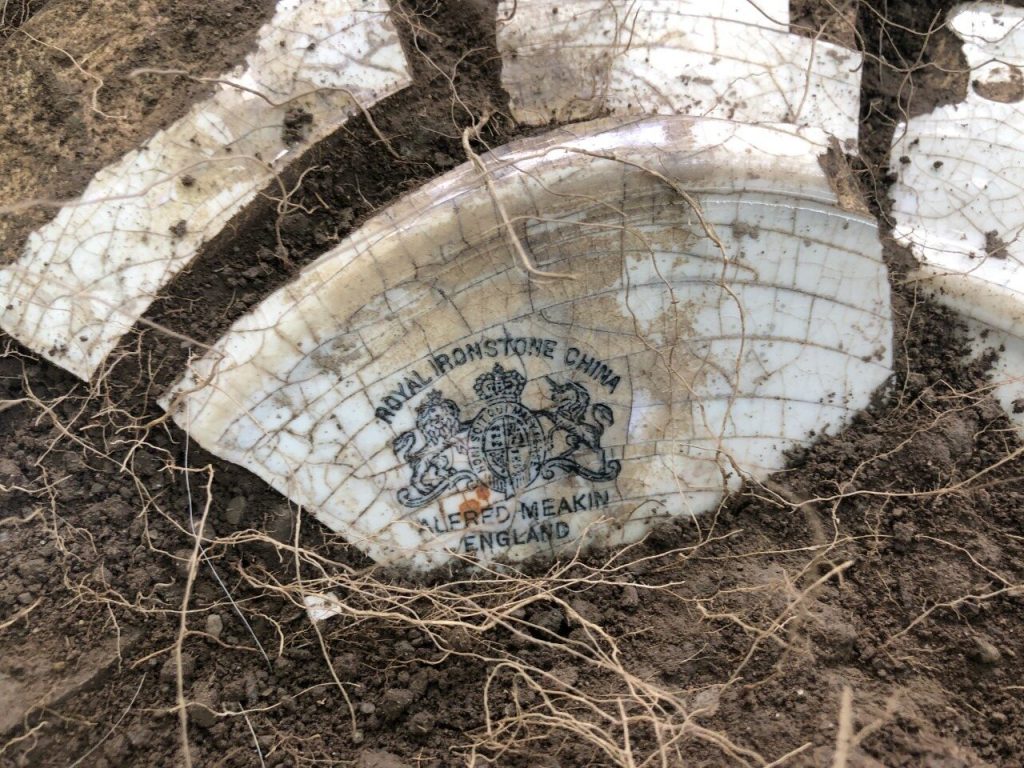
Frost Town has been the subject of excavations since at least 2012 and the subject of historical studies since the 1970’s.
The name “Frost Town” stems from Jonathan and Jacob Frost, two brothers who built a second sawmill on Briggs Creek before purchasing Gamaliel Wilder’s original sawmill. By the 1840s the brothers had sold their mills to John Hall and Isaiah Wilcox, but the name “Frost Town” stuck as a schoolhouse, cemetery, and other buildings emerged around the intersection of Gulick and Frost Hill roads.
he early 1800s was a booming era for Euro-American settlement and the industrialization of Western New York. This increase in logging activity was spurred by the construction of the Erie Canal and the incredible demand for timber as northern towns and cities rapidly expanded. The timber industry maintained its preeminence in the region into the early 20th century, though the old growth forests were largely logged-out by the mid-19th century.
There were many families that made Frost Town their home. Some of the family names of early settlers include Wilder, Frost, Hall, Wilcox, Porter, Proper, Abbey, McGeary, Brown, Dyer, Hatch, and Macumber among others. Many of Frost Town’s former residents have descendants who still live in the region.
By the middle of the 19th century, the landscape around Frost Town had profoundly changed. The old-growth forests that first attracted settlers to Frost Town were dwindling due to unsustainable use. Settlers continued to harvest smaller timber for pulp wood and planted logging stands for future use, but by the late 1800s most of the sawmills had been abandoned.
With timber resources gone, Frost Town turned to farming and shepherding. Like much of the surrounding area, the town became a center for sheep herding. Frost Town residents built fieldstone walls across the clear-cut forests to create pasture. Along with sheep, hops became an industrial staple for the region, with tall, wooden hop poles stretching across the landscape. Other Frost Town crops included potatoes, apples, and other garden vegetables.
In the 1920s, the federal government passed prohibition laws that banned the manufacture and sale of alcohol. This effectively ended hop farming. Additionally, the rise of industrial farming during World War I made it harder to be a small-scale farmer. Between 1890 and 1920, South Bristol’s population fell from 1,225 to 695. In Frost Town, the school was closed in the 1920s, only a few houses remained occupied after 1930, and most residents migrated to Naples, Rochester, or other areas.